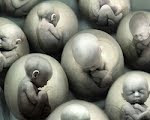
La genética es el campo de la biología que busca comprender la herencia biológica que se transmite de generación en generación.
El estudio de la genética permite comprender qué es lo que exactamente ocurre en el ciclo celular, (replicar nuestras células) y reproducción, (meiosis) de los seres vivos y cómo puede ser que, por ejemplo, entre seres humanos se transmitan características biológicas genotipo (contenido del genoma específico de un individuo en forma de ADN), características físicas fenotipo, de apariencia y hasta de personalidad.
El principal objeto de estudio de la genética son los genes, formados por segmentos de ADN (doble hebra) y ARN (hebra simple), tras la transcripicion de ARN mensajero, ARN ribosómico y ARN de transferencia, los cuales se sintetizan a partir de ADN. El ADN controla la estructura y el funcionamiento de cada célula, con la capacidad de crear copias exactas de sí mismo, tras un proceso llamado replicación,en el cual el ADN se replica.
En 1865 un monje estudioso de la herencia genética llamado Gregor Mendel observó que los organismos heredan caracteres de manera diferenciada. Estas unidades básicas de la herencia son actualmente denominadas genes.
En 1941 Edward Lawrie Tatum y George Wells Beadle demuestran que los genes [ARN-mensajero] codifican proteínas; luego en 1953 James D. Watson y Francis Crick determinan que la estructura del ADN es una doble hélice en direcciones antiparalelas, polimerizadas en dirección 5' a 3', para el año 1977 Fred Sanger, Walter Gilbert, y Allan Maxam secuencian ADN completo del genoma del bacteriófago y en 1990 se funda el Proyecto Genoma Humano.
La ciencia de la Genética
Aunque la genética juega un papel muy significativo en la apariencia y el comportamiento de los organismos, es la combinación de la genética [replicación, transcripción, procesamiento (maduración del ARN] con las experiencias del organismo la que determina el resultado final.
Los genes corresponden a regiones del ADN o ARN, dos moléculas compuestas de una cadena de cuatro tipos diferentes de bases nitrogenadas (adenina, timina, citosina y guanina en ADN), en las cuales tras la transcripcion (síntesis de ARN) se cambia la timina por uracilo —la secuencia de estos nucleótidos es la información genética que heredan los organismos. El ADN existe naturalmente en forma bicatenaria, es decir, en dos cadenas en que los nucleótidos de una cadena complementan los de la otra.
La secuencia de nucleótidos de un gen es traducida por las células para producir una cadena de aminoácidos, creando proteínas —el orden de los aminoácidos en una proteína corresponde con el orden de los nucleótidos del gen. Esto recibe el nombre de código genético. Los aminoácidos de una proteína determinan cómo se pliega en una forma tridimensional y responsable del funcionamiento de la proteína. Las proteínas ejecutan casi todas las funciones que las células necesitan para vivir.
El genoma es la totalidad de la información genética que posee un organismo en particular. Por lo general, al hablar de genoma en los seres eucarióticos nos referimos sólo al ADN contenido en el núcleo, organizado en cromosomas. Pero no debemos olvidar que también la mitocondria contiene genes llamado genoma mitocondrial.
Subdivisiones de la genética
La genética se subdivide en varias ramas, como:
- Clásica o mendeliana: Se preocupa del estudio de los cromosomas y los genes y de cómo se heredan de generación en generación.
- Cuantitativa, que analiza el impacto de múltiples genes sobre el fenotipo, muy especialmente cuando estos tienen efectos de pequeña escala.
- Molecular: Estudia el ADN, su composición y la manera en que se duplica. Asi mismo, estudia la función de los genes desde el punto de vista molecular.
- Evolutiva y de poblaciones: Se preocupa del comportamiento de los genes en una población y de cómo esto determina la evolución de los organismos. En la genetica se pueden encontrar muchos rasgos familiares en comun de la familia como el color de ojos, el color de piel y el color del cabello.
Ingeniería genética
La ingeniería genética es la especialidad que utiliza tecnología de la manipulación y trasferencia del ADN de unos organismos a otros, permitiendo controlar algunas de sus propiedades genéticas. Mediante la ingeniería genética se pueden potenciar y eliminar cualidades de organismos en el laboratorio (véase Organismo genéticamente modificado). Por ejemplo, se pueden corregir defectos genéticos (terapia génica), fabricar antibióticos en las glándulas mamarias de vacas de granja o clonar animales como la oveja Dolly. Algunas de las formas de controlar esto es mediante transfección (lisar células y usar material genético libre), conjugación (plásmidos) y transducción (uso de fagos o virus), entre otras formas. Además se puede ver la manera de regular esta expresión genética en los organismos.
Respecto a la terapia génica, antes mencionada, hay que decir que todavía no se ha conseguido llevar a cabo un tratamiento, con éxito, en humanos para curar alguna enfermedad. Todas las investigaciones se encuentran en la fase experimental. Debido a que aún no se ha descubierto la forma de que la terapia funcione (tal vez, aplicando distintos métodos para introducir el ADN), cada vez son menos los fondos dedicados a este tipo de investigaciones. Por otro lado, este es un campo que puede generar muchos beneficios económicos, ya que este tipo de terapias son muy costosas, por lo que, en cuanto se consiga mejorar la técnica, es de suponer que las inversiones subirán.
Historia de la genética
Usualmente se considera que la historia de la Genética comienza con el trabajo del monje agustino Gregor Mendel. Su investigación sobre hibridación en guisantes, publicada en 1866, describe lo que más tarde se conocería como las leyes de Mendel.
Pero su desarrollo vertiginoso se puede observar en la siguiente tabla cronológica.
Cronología de descubrimientos notables
| 1865 | Se publica el trabajo de Gregor Mendel |
| 1900 | Los botánicos Hugo de Vries, Carl Correns y Eric Von Tschermak redescubren el trabajo de Gregor Mendel |
| 1903 | Se descubre la implicación de los cromosomas en la herencia |
| 1905 | El biólogo británico William Bateson acuña el término "Genetics" en una carta a Adam Sedgwick |
| 1910 | Thomas Hunt Morgan demuestra que los genes residen en los cromosomas. Además, gracias al fenómeno de recombinación genética consiguió describir la posición de diversos genes en los cromosomas. |
| 1913 | Alfred Sturtevant crea el primer mapa genético de un cromosoma |
| 1918 | Ronald Fisher publica On the correlation between relatives on the supposition of Mendelian inheritance —la síntesis moderna comienza. |
| 1923 | Los mapas genéticos demuestran la disposición lineal de los genes en los cromosomas |
| 1928 | Se denomina mutación a cualquier cambio en la secuencia nucleotídica de un gen, sea esta evidente o no en el fenotipo |
| 1928 | Fred Griffith descubre una molécula hereditaria transmisible entre bacterias (véase Experimento de Griffith) |
| 1931 | El entrecruzamiento es la causa de la recombinación |
| 1941 | Edward Lawrie Tatum y George Wells Beadle demuestran que los genes codifican proteínas; véase el dogma central de la Biología |
| 1944 | Oswald Theodore Avery, Colin McLeod y Maclyn McCarty demuestran que el ADN es el material genético (denominado entonces principio transformante) |
| 1950 | Erwin Chargaff demuestra que las proporciones de cada nucleótido siguen algunas reglas (por ejemplo, que la cantidad de adenina, A, tiende a ser igual a la cantidad detimina, T). Barbara McClintock descubre los transposones en el maíz |
| 1952 | El experimento de Hershey y Chase demuestra que la información genética de los fagos reside en el ADN |
| 1953 | James D. Watson y Francis Crick determinan que la estructura del ADN es una doble hélice |
| 1956 | Jo Hin Tjio y Albert Levan establecen que, en la especie humana, el número de cromosomas es 46 |
| 1958 | El experimento de Meselson y Stahl demuestra que la replicación del ADN es replicación semiconservativa |
| 1961 | El código genético está organizado en tripletes |
| 1964 | Howard Temin demuestra, empleando virus de ARN, excepciones al dogma central de Watson |
| 1970 | Se descubren las enzimas de restricción en la bacteria Haemophilius influenzae, lo que permite a los científicos manipular el ADN |
| 1973 | El estudio de linajes celulares mediante análisis clonal y el estudio de mutaciones homeóticas condujeron a la teoría de los compartimentos propuesta por Antonio García-Bellido et al. Según esta teoría, el organismo está constituido por compartimentos o unidades definidas por la acción de genes maestros que ejecutan decisiones que conducen a varios clones de células hacia una línea de desarrollo. |
| 1977 | Fred Sanger, Walter Gilbert, y Allan Maxam, secuencian ADN por primera vez trabajando independientemente. El laboratorio de Sanger completa la secuencia del genoma del bacteriófago Φ-X174 |
| 1983 | Kary Banks Mullis descubre la reacción en cadena de la polimerasa, que posibilita la amplificación del ADN |
| 1989 | Francis Collins y Lap-Chee Tsui secuencian un gen humano por primera vez. El gen codifica la proteína CFTR, cuyo defecto causa fibrosis quística |
| 1990 | Se funda el Proyecto Genoma Humano por parte del Departamento de Energía y los Institutos de la Salud de los Estados Unidos |
| 1995 | El genoma de Haemophilus influenzae es el primer genoma secuenciado de un organismo de vida libre |
| 1996 | Se da a conocer por primera vez la secuencia completa de un eucariota, la levadura Saccharomyces cerevisiae |
| 1998 | Se da a conocer por primera vez la secuencia completa de un eucariota pluricelular, el nematodo Caenorhabditis elegans |
| 2001 | El Proyecto Genoma Humano y Celera Genomics presentan el primer borrador de la secuencia del genoma humano |
| 2003 | (14 de abril) Se completa con éxito el Proyecto Genoma Humano con el 99% del genoma secuenciado con una precisión del 99,99%1 |
El conocimiento genético ha permitido la mejora extensa en productividad de plantas usadas para el alimento como por ejemplo el arroz, trigo, y el maíz. El conocimiento genético también ha sido un componente dominante de la revolución en salud y asistencia médica en este siglo.
Su importancia en la rama de la Bioingeniería ha sido alterar el material genético de un organismo.
Permite alterar diversos segmentos del ADN, adquiriendo genes nuevos y nuevos rasgos genéticos, así como evitar malformaciones en el ADN.
En el área de la salud ha permitido el tratamiento y prevenir la repetición del Síndrome de Down. La bioingeniería ofrece la esperanza de crear antibióticos más eficaces, además de el descubrimiento de una hormona del crecimiento para combatir el enanismo.
Sin duda la genética juega un papel muy importante en la evolución de la especie, y la erradicación de enfermedades genéticas.
Genetics is the field of biology that seeks to understand biological inheritance that is passed from generation to generation.The study of genetics to understand what exactly happens in the cell cycle (replicate our cells) and reproduction (meiosis) of living things and how they might, for example, between human biological characteristics are transmitted genotype(genome content specific to an individual in the form of DNA), physical phenotype, appearance and even personality.The main object of study of genetics genes are formed by segments of DNA (double strand) and RNA (single strand), after transcripicion messenger RNA, ribosomal RNA and transfer RNA, which is synthesized from DNA . DNA controls the structure and operation of each cell, with the ability to create exact copies of itself, after a process called replication, in which the DNA is replicated.In 1865 a scholar monk named Gregor Mendel heredity observed that organisms inherit characters differently. These basic units of inheritance are now called genes.In 1941 Edward Lawrie Tatum and George Wells Beadle show that genes [messenger RNA] encode proteins, then in 1953 James D. Watson and Francis Crick determined the structure of DNA is a double helix in antiparallel directions, polymerized in 5 'to 3', for the year 1977 Fred Sanger, Walter Gilbert and Allan Maxam complete DNA sequenced genome of bacteriophage and in 1990underlying the Human Genome Project.
The science of geneticsAlthough genetics plays a significant role in the appearance and behavior of organisms is the combination of genetics [replication, transcription, processing (maturation of RNA] with the experiences of the body that determines the outcome.Genes correspond to regions of DNA or RNA, two molecules composed of a chain of four different types of nitrogenous bases (adenine, thymine, cytosine and guanine in DNA), in which after transcription (RNA synthesis) is changed to thymine by uracil-the sequence of these nucleotides is the genetic information organisms inherit.Occur naturally in DNA double-stranded form, ie in that two strings of a string of nucleotides complementary to each other.The nucleotide sequence of a gene is translated by the cell to produce a chain of amino acids, proteins, creating the order of amino acids in a protein corresponds to the order of the nucleotides of the gene. This is called the genetic code. The amino acids of a protein is folded in determining how a three-dimensional shape and responsible of the functioning of the protein. Proteins perform most functions that cells need to live.The genome is the totality of genetic information has a particular organism.Generally, speaking of the genome in eukaryotic beings we refer only to the DNA in the nucleus, organized into chromosomes. But we must not forget that also contains genes called mitochondria mitochondrial genome.Subdivisions of genetics
The science of geneticsAlthough genetics plays a significant role in the appearance and behavior of organisms is the combination of genetics [replication, transcription, processing (maturation of RNA] with the experiences of the body that determines the outcome.Genes correspond to regions of DNA or RNA, two molecules composed of a chain of four different types of nitrogenous bases (adenine, thymine, cytosine and guanine in DNA), in which after transcription (RNA synthesis) is changed to thymine by uracil-the sequence of these nucleotides is the genetic information organisms inherit.Occur naturally in DNA double-stranded form, ie in that two strings of a string of nucleotides complementary to each other.The nucleotide sequence of a gene is translated by the cell to produce a chain of amino acids, proteins, creating the order of amino acids in a protein corresponds to the order of the nucleotides of the gene. This is called the genetic code. The amino acids of a protein is folded in determining how a three-dimensional shape and responsible of the functioning of the protein. Proteins perform most functions that cells need to live.The genome is the totality of genetic information has a particular organism.Generally, speaking of the genome in eukaryotic beings we refer only to the DNA in the nucleus, organized into chromosomes. But we must not forget that also contains genes called mitochondria mitochondrial genome.Subdivisions of genetics
The gene is divided into several branches, including:Classical Mendelian worries about the study of chromosomes and genes and how they are inherited from generation to generation.Quantitative analyzes the impact of multiple genes on the phenotype, especially when these effects are small.Molecular studies on DNA, its composition and how doubles. Likewise, studies the function of genes from the molecular point of view.Evolutionary and population: is concerned with the behavior of genes in a population and how this determines the evolution of organisms. In genetics will find many familiar features in common of the family as eye color, skin color and hair color.Genetic EngineeringGenetic engineering is the specialty that uses technology from the handling and transfer of DNA from one agency to another, allowing control some of its genetic properties. Genetic engineering can enhance and remove attributes of organisms in the laboratory (see Genetically Modified Organism). For example, you can correct genetic defects (gene therapy), manufacture antibiotics in the mammary glands of cows or farm animals such as sheep clone Dolly. Some of the ways to handle this is by transfection (lyse cells and genetic material free use), conjugation (plasmids) and transduction (using phage or virus), among other ways. You can also see how to regulate this gene expression in organisms.Regarding gene therapy, mentioned above, I must say that has not yet managed to carry out treatment, with success, to cure human disease. All investigations are in the experimental stage. Because not yet discovered how the therapy works (perhaps using different methods for introducing DNA), there are fewer funds devoted to such research. On the other hand, this is a field that can generate many economic benefits, because these therapies are very expensive, so that once you get to improve the technique, it is anticipated that investment will rise.
History of geneticsUsually it is considered that the history of genetics begins with the work of the Augustinian monk Gregor Mendel. His research on hybridization in peas, published in 1866, describes what later became known as Mendel's laws.But its rapid development can be seen in the following chronological table.Timeline of notable discoveriesYearEvent1865 Publication of the work of Gregor Mendel1900 The botanists Hugo de Vries, Carl Correns and Eric Von Tschermak rediscovered the work of Gregor Mendel1903 Discovery of the involvement of chromosomes in heredity1905 The British biologist William Bateson coins the term "Genetics" in a letter to Adam Sedgwick1910 Thomas Hunt Morgan shows that genes reside on chromosomes. And thanks to the phenomenon of genetic recombination obtained describe the position of various genes in the chromosomes.1913 Alfred Sturtevant created the first genetic map of a chromosome1918 Ronald Fisher publishes On the correlation relatives on the supposition Between Mendelian inheritance-of the modern synthesis begins.1923 Genetic maps showing the linear arrangement of genes on chromosomes1928 mutation is referred to any changes in the nucleotide sequence of a gene, whether or not this obvious phenotype in1928 Fred Griffith discovers a hereditary molecule that is transmissible between bacteria (see Experiment Griffith)1931 Crosslinking causes recombination1941 Edward Lawrie Tatum and George Wells Beadle show that genes encoding proteins, see the central dogma of biology1944 Oswald Theodore Avery, Colin McLeod and Maclyn McCarty show that DNA is the genetic material (called a transforming principle)1950 Erwin Chargaff shows that the proportions of each nucleotide are some rules (for example, that the amount of adenine, A, tends to be equal to the amount detimina, T). Barbara McClintock discovers transposons in maize1952 The Hershey-Chase experiment proves the genetic information of phages lies in the DNA1953 James D. Watson and Francis Crick determined the structure of DNA is a double helixJo Hin Tjio 1956 and Albert Levan established that, in humans, the number of chromosomes is 461958 The Meselson-Stahl experiment demonstrates that DNA replication is semiconservative replication1961 The genetic code is organized in triplets1964 Howard Temin shows, using RNA viruses, exceptions to the central dogma of Watson1970 are discovered restriction enzymes in the bacterium Haemophilus influenzae, which enables scientists to manipulate DNA1973 The study of cell lineages by clonal analysis and study of homeotic mutations led to the theory of the compartments proposed by Antonio Garcia-Bellido et al.According to this theory, the body is made up of compartments or units defined by the action of master genes that execute decisions that lead to multiple clones of cells into a line of development.1977 Fred Sanger, Walter Gilbert and Allan Maxam, DNA sequenced for the first time working independently. Sanger's lab complete genome sequence of bacteriophage Φ-X1741983 Kary Banks Mullis discovers reaction polymerase chain, which allows the amplification of DNA1989 Francis Collins and Lap-Chee Tsui sequenced a human gene for the first time.The gene encoding the CFTR protein, whose defect causes cystic fibrosis1990 is founded the Human Genome Project by the Department of Energy and National Institutes of Health of the U.S.1995 The genome of Haemophilus influenzae is the first sequenced genome of a free-living organism1996 is disclosed for the first time the complete sequence of a eukaryotic yeast Saccharomyces cerevisiae1998 It is reported for the first time the complete sequence of a multicellular eukaryote, the nematode Caenorhabditis elegans2001 The Human Genome Project and Celera Genomics presented the first draft of human genome sequence2003 (April 14) was successfully completed Human Genome Project with 99% of the genome sequenced to an accuracy of 99.99% 1
Importance of genetics
Genetic knowledge has led to vast improvement in productivity of plants used for food such as rice, wheat, and corn. Genetic knowledge has also been a key component of the revolution in health and health care in this century.Its importance in the field of bioengineering has been altering the genetic material of an organism.Allows you to alter various segments of DNA, acquiring new genes and new genetic traits and avoid defects in the DNA.In the health area has allowed the treatment and prevention of recurrence of Down syndrome. Bioengineering offers the hope of creating more effective antibiotics, in addition to the discovery of a growth hormone to combat dwarfism.Certainly genetics plays an important role in the evolution of the species and the eradication of genetic diseases..


No hay comentarios:
Publicar un comentario